Cyril Luckham: A Distinguished British Character Actor and His Legacy in Film and Television

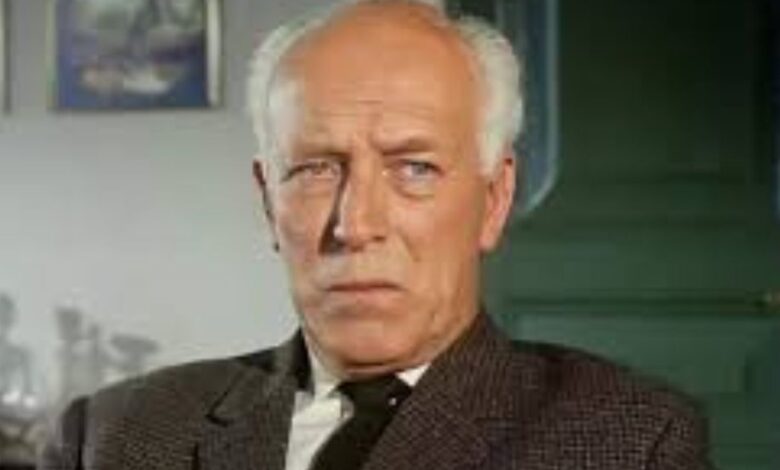
Who Is Cyril Luckham?
Cyril Luckham was a highly respected British stage, film, and television actor whose career spanned more than five decades. Born on July 25, 1907, in Salisbury, England, Luckham became known for his commanding presence, refined voice, and ability to portray authority figures such as judges, clergymen, aristocrats, and military officials.
Before entering the world of acting, Luckham served in the Royal Navy, an experience that contributed to the dignified demeanor he later brought to many of his roles. After leaving the Navy, he trained at the Royal Academy of Dramatic Art (RADA), one of the UK’s most prestigious acting institutions. His theatrical roots remained evident throughout his career, influencing his performances on both stage and screen.
Luckham’s work reflects the golden age of British acting, where character actors played essential roles in shaping compelling narratives in film, television, and theatre.
Early Career and Rise in British Theatre
Cyril Luckham began his acting journey in the 1930s, debuting on stage in 1935. During this time, British theatre was a dominant cultural force, and actors were expected to master classical training, diction, and stage presence.
Luckham quickly established himself as a dependable performer, appearing in numerous stage productions. His ability to deliver complex dialogue with clarity and authority made him a favorite for roles requiring intellectual or moral gravitas.
His transition from theatre to film and television was gradual but successful, allowing him to build a diverse portfolio across multiple mediums.
Cyril Luckham Movies and TV Shows
Film Career Highlights
Cyril Luckham appeared in a wide range of films from the 1940s through the 1970s. Though often cast in supporting roles, his performances added depth and authenticity to major productions.
Some of his most notable films include:
- Murder in Reverse (1945)
- Stranger from Venus (1954)
- The Pumpkin Eater (1964)
- The Alphabet Murders (1965)
- Anne of the Thousand Days (1969)
- Providence (1977)
However, his most historically significant role came in the Oscar-winning film:
A Man for All Seasons (1966)
Cyril Luckham played Archbishop Cranmer in A Man for All Seasons, a film widely regarded as one of the finest historical dramas ever made.
The film starred Paul Scofield as Sir Thomas More, a role that earned him the Academy Award for Best Actor. The film itself won multiple Oscars, including Best Picture.
Luckham’s performance, though not central, contributed to the film’s authenticity and dramatic weight. His portrayal of Cranmer reflected the political and religious tensions of Tudor England.
Cast of A Man for All Seasons
The film featured an exceptional ensemble cast, including:
- Paul Scofield – Sir Thomas More
- Wendy Hiller – Lady Alice More
- Robert Shaw – King Henry VIII
- Orson Welles – Cardinal Wolsey
- Leo McKern – Thomas Cromwell
- Susannah York – Margaret More
- John Hurt – Richard Rich
- Cyril Luckham – Archbishop Cranmer
This ensemble cast highlights the caliber of talent Luckham worked alongside, reinforcing his place within the elite circle of British character actors.
Television Career and Popular Roles
Cyril Luckham’s television work was equally impressive and perhaps more widely recognized by general audiences.
Notable TV Appearances
- Doctor Who – The White Guardian
- The Forsyte Saga (1967)
- Public Eye (1971)
- The Guardians (1971)
- The Cedar Tree (1975–1979)
- The Omega Factor (1979)
In Doctor Who, Luckham portrayed the White Guardian, a powerful and enigmatic figure. This role introduced him to a new generation of viewers and remains one of his most memorable television appearances.
Cyril Luckham in Tales of the Unexpected
One of the notable keywords associated with Luckham is Tales of the Unexpected.
This anthology series, inspired by the works of Roald Dahl, aired from 1979 to 1988 and became famous for its suspenseful storytelling and twist endings.
While the show featured a wide range of British actors, it represents the type of television environment in which Luckham thrived—one that valued strong character performances and theatrical delivery.
Actors like Luckham were frequently cast in such series because of their ability to elevate short-form storytelling through nuanced performances.
Personal Life: Violet Lamb
Cyril Luckham was married to Violet Lamb, who was also an actress.
Their marriage reflects a common tradition in British theatre and film, where actors often formed partnerships both on and off stage. Though Violet Lamb maintained a lower public profile compared to her husband, she was part of the same artistic world and contributed to the performing arts community.
Contemporaries and Related Actors
John Welsh
John Welsh was another notable British character actor, often appearing in historical dramas and supporting roles similar to Luckham’s. Like Luckham, Welsh brought a sense of authority and authenticity to his performances.
Both actors represent a generation that prioritized craft over celebrity, focusing on delivering strong, believable characters rather than seeking leading-man status.
Geoffrey Whitehead
Geoffrey Whitehead belongs to a slightly later generation of British actors but shares stylistic similarities with Luckham.
Whitehead has appeared in numerous television series, films, and radio productions. His career reflects the enduring influence of actors like Cyril Luckham, who set a standard for professionalism and versatility in the industry.
Paul Scofield
Paul Scofield stands as one of the most distinguished actors of his time. His collaboration with Luckham in A Man for All Seasons highlights the interconnected nature of British acting talent during that era.
Scofield’s intense, introspective style contrasted with Luckham’s authoritative presence, creating a dynamic balance within the film.
Acting Style and Legacy
Cyril Luckham was not a typical leading actor, but rather a quintessential character actor—someone who enhances a story without overshadowing it.
Key Traits of His Acting:
- Strong, authoritative voice
- Commanding screen presence
- Ability to portray intellectual and moral authority
- Consistency across theatre, film, and television
His performances were marked by subtlety rather than flamboyance. He often played roles that required credibility, such as judges, bishops, and officials, making him a reliable choice for period dramas and serious narratives.
Contribution to British Entertainment
Cyril Luckham’s career coincided with a transformative period in British entertainment:
- The rise of television in the 1950s and 1960s
- The golden age of British cinema
- Continued importance of theatre
He successfully navigated all three mediums, demonstrating adaptability and longevity. His presence in productions like Doctor Who and A Man for All Seasons ensured that his work reached diverse audiences.
Why Cyril Luckham Still Matters Today
Even though Cyril Luckham may not be as widely recognized as some of his contemporaries, his contributions remain significant for several reasons:
- Representation of Character Acting Excellence
He exemplifies the importance of supporting roles in storytelling. - Connection to Iconic Productions
His work in Doctor Who and A Man for All Seasons ensures lasting recognition. - Influence on Future Generations
Actors like Geoffrey Whitehead continue the tradition he helped establish. - Historical Importance
His roles often contributed to historically rich narratives, preserving cultural storytelling.
Conclusion
Cyril Luckham stands as a testament to the enduring value of character actors in British entertainment. From his early days in theatre to his memorable roles in film and television, he consistently delivered performances that added depth, credibility, and gravitas.
His association with major productions, collaboration with actors like Paul Scofield, and connection to influential series like Tales of the Unexpected place him firmly within the legacy of British acting excellence.
While he may not have been a household name in the traditional sense, his work continues to resonate with audiences who appreciate the art of nuanced, character-driven performance.
For readers and enthusiasts exploring classic British cinema and television, Cyril Luckham remains a figure worth discovering—and rediscovering—through platforms like infizo, where timeless talent meets modern appreciation.