Tek-102: A Complete Guide to Its Meaning, Applications, Features, and Future Potential

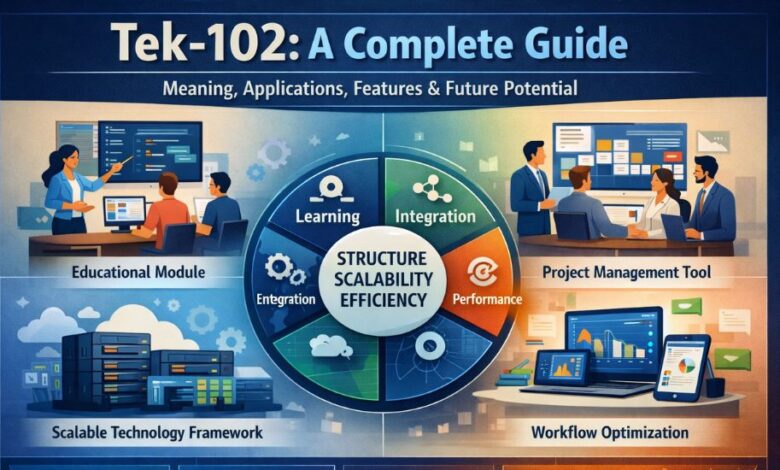
In today’s rapidly evolving digital world, new technical terms, frameworks, and identifiers continue to emerge. One such term that has been gaining attention across blogs and online discussions is tek-102. Although the keyword may appear technical or product-specific at first glance, it has been described in multiple contexts—ranging from educational modules and technology frameworks to workflow optimization tools and structured system identifiers.
This comprehensive article explores what tek-102 represents, its key features, practical applications, potential benefits, and why it is increasingly being discussed across technology-focused blogs and platforms.
Understanding Tek-102
The term tek-102 is commonly presented as a structured technology concept or classification. In many online discussions, it appears as:
- A technology framework or structured system model
- A digital workflow or project management solution
- A learning module or educational course identifier
- A performance level classification in technical documentation
Unlike mainstream branded technologies, tek-102 does not refer to a single globally recognized product. Instead, it is often used as a flexible label that adapts to different technical environments. This adaptability is one of the reasons why the term continues to surface in blogs and digital discussions.
The Concept Behind Tek-102
At its core, tek-102 represents structured advancement. The numeric suffix “102” commonly implies progression—similar to how educational courses move from beginner (101) to intermediate (102). In this sense, tek-102 often symbolizes:
- Intermediate-level technical learning
- Enhanced system capabilities
- Structured expansion of foundational technology
- Organized development beyond basic systems
This progression-based identity gives tek-102 a practical positioning within educational institutions, corporate systems, and digital product frameworks.
Key Features Associated with Tek-102
Across various blog discussions and interpretations, tek-102 is typically associated with several consistent features:
1. Structured Framework Design
Tek-102 is often described as a structured system that builds upon foundational components. It provides:
- Organized module-based design
- Clear documentation standards
- Logical hierarchy within systems
- Defined processes for scalability
Such structured design is crucial in technology development, where clarity and consistency reduce errors and improve efficiency.
2. Scalability and Expansion
One of the most emphasized aspects of tek-102 is scalability. In digital environments, scalability determines how effectively a system can grow. Tek-102 frameworks are described as:
- Flexible for future updates
- Compatible with expanding databases
- Adaptable to new technological standards
- Capable of handling increased workloads
In modern software and digital operations, scalability is not optional—it is essential. Tek-102’s structured design makes expansion smoother and more predictable.
3. Compatibility Across Systems
Compatibility is another recurring theme in discussions about tek-102. Whether used in educational systems, project management tools, or software frameworks, tek-102 is portrayed as being:
- Cross-platform adaptable
- Integration-friendly
- Supportive of legacy systems
- Designed for interoperability
In business environments where multiple tools and platforms coexist, compatibility ensures smoother workflow transitions and system integration.
4. Workflow Optimization
Some interpretations position tek-102 as a workflow optimization tool. In this context, it includes features such as:
- Task organization
- Progress tracking
- Team collaboration
- Reporting dashboards
- Resource management
When described this way, tek-102 functions similarly to structured project management systems that enhance productivity and streamline team communication.
Tek-102 in Education
One of the most common contexts in which tek-102 appears is education and training. In academic structures, “102” typically signifies intermediate-level coursework.
How Tek-102 Functions in Learning Environments
- Builds on introductory concepts (similar to 101-level courses)
- Introduces applied learning methods
- Emphasizes practical skill development
- Encourages system-based thinking
For example, in technology education, a tek-102 module might cover:
- Intermediate programming concepts
- Systems architecture basics
- Applied digital tools
- Real-world project simulations
This structure supports progressive learning, ensuring students move from theoretical understanding to practical application.
Tek-102 in Business and Corporate Settings
Beyond education, tek-102 is frequently framed as a structured business tool or operational model.
1. Project Management
Organizations use structured models like tek-102 to:
- Assign and monitor tasks
- Improve accountability
- Track project milestones
- Manage team collaboration
By implementing a structured framework, businesses reduce ambiguity and increase operational clarity.
2. Process Standardization
Standardization is critical in scaling businesses. Tek-102’s structured approach supports:
- Uniform documentation
- Defined workflow processes
- Quality control benchmarks
- Performance evaluation systems
Standardized processes help organizations maintain consistent performance even as they expand.
3. Performance Monitoring
Another reported application of tek-102 involves performance measurement systems. These systems typically include:
- KPI tracking
- Data analysis dashboards
- Efficiency metrics
- Productivity insights
With measurable indicators, companies can make informed decisions rather than relying on guesswork.
Benefits of Tek-102
Although interpretations vary, several key benefits consistently emerge.
Improved Efficiency
Structured systems eliminate confusion and reduce time spent on repetitive clarification. Clear hierarchies and documentation ensure smoother execution of tasks.
Better Organization
Whether in education or business, organization determines success. Tek-102’s layered design supports:
- Clear role assignments
- Defined learning paths
- Logical content progression
- Systematic workflow structures
Adaptability
In an age of rapid digital transformation, adaptability is critical. Tek-102’s flexible positioning allows it to integrate into:
- Educational frameworks
- Corporate systems
- Digital platforms
- Technical documentation standards
Enhanced Collaboration
When used in project environments, tek-102 supports team interaction by providing structured communication channels and transparent progress tracking.
Challenges and Ambiguities
Despite its advantages, tek-102 also presents certain challenges.
1. Lack of a Universal Definition
Unlike established technologies, tek-102 does not have a single authoritative definition. This can create confusion for readers searching for precise information.
2. Marketing-Style Presentation
Some blog posts present tek-102 in highly promotional tones without detailed technical backing. This can blur the line between conceptual framework and actual product.
3. Contextual Variability
The meaning of tek-102 depends heavily on context:
- In education → Intermediate learning module
- In corporate environments → Structured workflow system
- In technology frameworks → System classification identifier
Understanding the context is essential for accurate interpretation.
The Future Potential of Tek-102
Given its structured and scalable identity, tek-102 has strong future potential in several areas:
1. Digital Learning Platforms
As online education continues to expand, structured modules like tek-102 can help design progressive skill pathways.
2. Hybrid Work Environments
With remote and hybrid work models becoming standard, structured workflow systems are increasingly necessary. Tek-102-style frameworks can support distributed teams.
3. Automation and AI Integration
Structured systems are easier to automate. Tek-102’s logical hierarchy makes it suitable for integration with AI-driven analytics and automation tools.
4. Technical Documentation Systems
As businesses scale globally, documentation clarity becomes critical. Tek-102-style frameworks can improve documentation consistency across teams.
Why Tek-102 Is Gaining Online Attention
The growing visibility of tek-102 in blog discussions can be attributed to:
- Increased demand for structured digital systems
- Expansion of intermediate-level tech education
- Need for scalable frameworks
- Rising importance of workflow optimization
As organizations and institutions look for structured advancement models, terms like tek-102 naturally gain relevance.
Practical Example Scenario
To better understand tek-102, consider a hypothetical example:
A mid-sized technology company wants to improve its internal processes. Initially, it uses informal workflows with minimal documentation. As the company grows, inefficiencies appear.
By implementing a tek-102-style structured framework, the company:
- Creates defined workflow modules
- Introduces task tracking dashboards
- Standardizes documentation
- Implements performance benchmarks
Within months, operational clarity improves, and productivity increases. This example demonstrates how structured progression models deliver measurable impact.
Tek-102 and Digital Transformation
Digital transformation requires more than adopting new tools—it requires structured thinking. Tek-102 aligns well with digital transformation strategies because it emphasizes:
- Progressive development
- Structured expansion
- Measurable performance
- Scalable integration
Organizations that implement structured frameworks are better positioned to adapt to rapid technological changes.
Final Thoughts
Tek-102 represents more than just a keyword circulating across blogs. It symbolizes structured progression in technology, education, and business systems. Whether interpreted as a learning module, workflow framework, or system classification model, its core principles remain consistent:
- Structure
- Scalability
- Organization
- Compatibility
- Measurable performance
As digital ecosystems continue evolving, structured frameworks like tek-102 will likely play a growing role in helping organizations and learners transition from foundational knowledge to advanced implementation.
For readers interested in exploring more in-depth technology concepts, structured system guides, and digital transformation insights, you can find similar comprehensive articles and tech-focused content on my English blog site infizo, where we regularly publish detailed resources on emerging tech topics and digital trends.